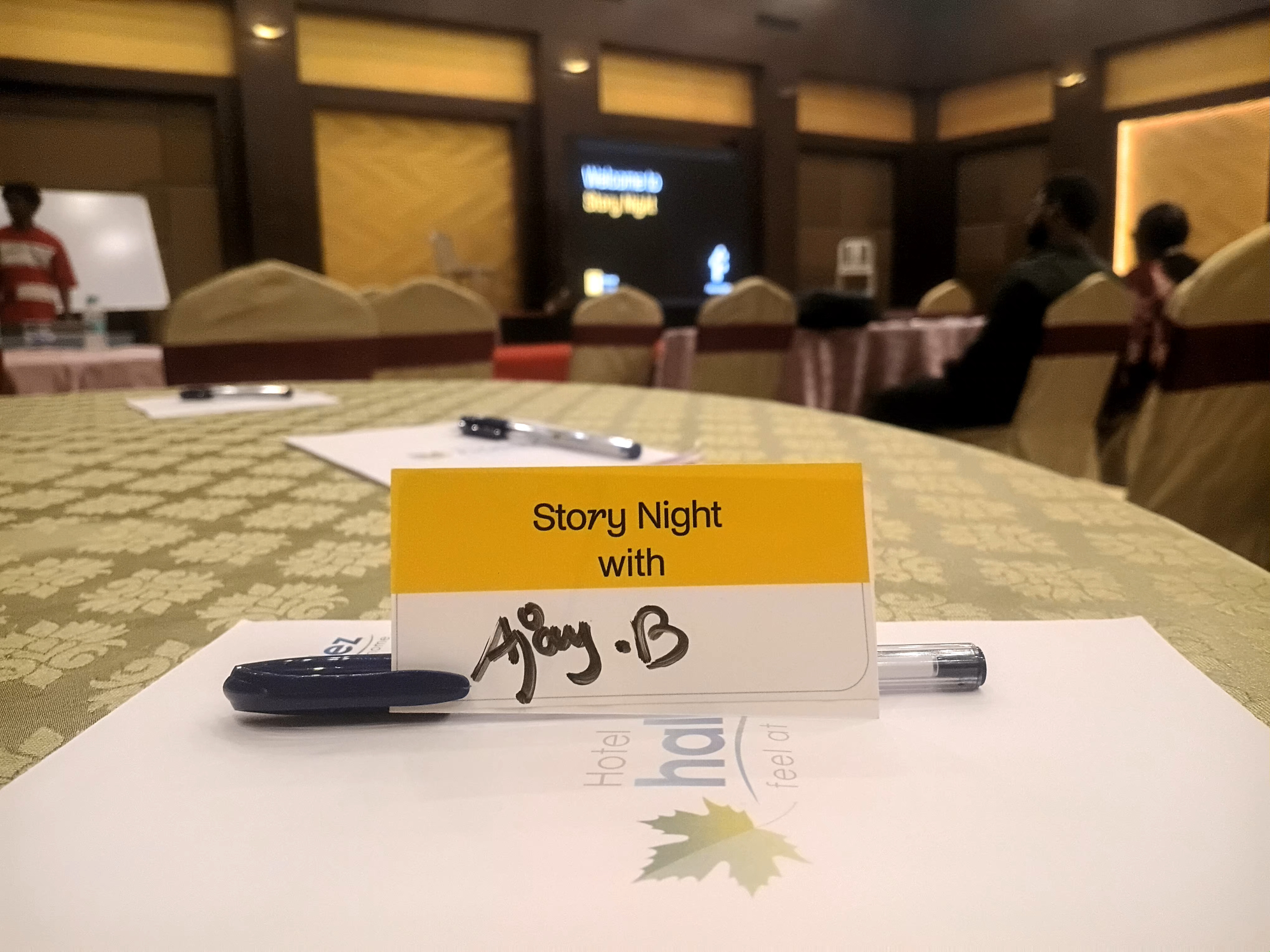
Introduction: An Evening of Stories and Inspiration
Story Night with George Christopher at Hotel Halez was more than just another networking event. It was an intimate gathering where one person's journey became a mirror for reflecting on our own paths—the choices we make, the courage it takes to pivot, and the persistence required to succeed in uncertain territory.
In a world obsessed with overnight success stories and viral startups, hearing about a deliberate, thoughtful journey from mechanical engineering to software entrepreneurship felt refreshingly grounded. George's story wasn't about luck or chance—it was about conscious decision-making and relentless execution.
The Journey: From Mechanical Engineering to Programming to Entrepreneurship
George Christopher's career trajectory is a masterclass in intentional career pivoting. He began as a mechanical engineer—a field with clear credentials, established career paths, and predictable progression. By most measures, it was a secure choice.
But at some point, George recognized that his interests and strengths diverged from the path laid out before him. Rather than invest decades in a field he wasn't passionate about, he made a bold move: transitioning into programming. This wasn't a casual hobby project—it was a deliberate career reinvention that required learning new skills, potentially accepting lower initial salaries, and operating outside the comfort of established expertise.
What impressed me most was that George didn't just learn to code—he learned deliberately, deeply, and with a clear purpose. His second transition, from engineer-turned-programmer to entrepreneur, shows that career development isn't linear. It's iterative, informed by experience, and driven by genuine curiosity about what creates value.
Building Something Meaningful
George eventually founded a company that achieved significant financial success. But what stood out in his telling of the story wasn't the revenue or exit—it was the problems he solved and the team he built. He talked about identifying gaps in the market, persisting through challenges, and scaling thoughtfully.
This framing of success—measured first by impact and second by financial returns—is something I've been thinking about carefully. In a culture that obsesses over valuations and exit multiples, it's easy to lose sight of why you started building in the first place.
Lessons on Adaptability and Resilience
Throughout George's narrative, a consistent theme emerged: the ability to adapt when circumstances change or initial plans don't work out. Building a company means encountering hundreds of moments where you expected one outcome and got another. How you respond to those moments determines whether you build something lasting or burn out trying.
George shared stories of pivots, of teams that didn't work out, of market shifts that forced rethinking entire strategies. But these weren't presented as failures—they were learning experiences that sharpened his judgment and improved his execution. This reframing of setbacks as data points rather than defeats is powerful and something I want to cultivate in my own approach to building.
- Flexibility Over Rigidity: Plans change. Markets shift. The ability to adapt while staying true to core principles is more valuable than perfect execution of an outdated plan.
- Learning from Setbacks: Every challenge George faced became a learning opportunity. Failure wasn't an endpoint—it was information.
- Building Relationships: Entrepreneurial success isn't solo. George emphasized the importance of surrounding yourself with capable people and maintaining those relationships.
- Patience with Growth: Real success takes time. George didn't expect overnight results; he built systematically and consistently.
Risk-Taking: Calculated Courage
One of the most nuanced parts of George's talk was his treatment of risk. He didn't frame risk-taking as reckless abandon—he presented it as calculated decisions informed by research, market understanding, and realistic assessment of personal circumstances.
This perspective shifted something for me. I've often thought of entrepreneurship as an all-or-nothing bet. But George's approach suggested something more pragmatic: you can take meaningful risks while managing downside exposure. You can experiment while maintaining financial stability. You can be ambitious without being reckless.
The persistence angle was equally important. George didn't succeed on the first attempt. He encountered obstacles, made mistakes, and had to persist through periods where success seemed uncertain. But he stayed the course, learned from feedback, and continued executing. That combination—adaptability plus persistence—seems to be the common thread in most meaningful achievements.
The Value of Meaningful Conversations
Beyond George's formal presentation, Story Night created an environment for genuine connection. The dinner format and smaller gathering size meant conversations weren't rushed. People asked authentic questions, and George responded with thoughtful detail rather than canned answers.
I found myself in conversations with other attendees—some founders, some aspiring entrepreneurs, some just curious about what it takes to build something. These conversations revealed that almost everyone in the room was grappling with similar questions: How do you know if you should take the leap? How do you balance security with ambition? How do you persist when things get hard?
The networking value here wasn't transactional—it wasn't about collecting contacts or promoting something. It was about finding community among people asking similar questions about their careers and ambitions. That kind of environment is rare and valuable.
Key Takeaways
Career Pivots Require Courage and Planning
Major transitions are possible when driven by genuine interest and backed by deliberate skill-building. Timing and financial preparation matter.
Adaptability is More Valuable Than Perfect Plans
The ability to respond to market feedback, team dynamics, and unexpected challenges matters more than rigid adherence to initial strategies.
Risk-Taking Can Be Calculated
Entrepreneurship doesn't require recklessness. Understanding your runway, skills, and circumstances allows for informed risk-taking.
Surrounding Yourself with Good People Matters
Entrepreneurs succeed through capable teams and meaningful relationships. Building a strong network of collaborators and mentors is essential.
Patience with Growth and Learning from Failure
Real success compounds over time. Treating setbacks as learning opportunities rather than defeats changes how you approach entrepreneurship.
Personal Reflection: What This Means for My Path
George's story resonated with me because it validates something I've been thinking about: that career success isn't about following a predetermined path, but about making intentional choices aligned with your interests and strengths. It's about being willing to reinvent yourself if current circumstances don't serve your growth.
I came away with clarity on a few things. First, technical skills matter, but adaptability and judgment matter more. Second, building something meaningful is possible without betting everything—you can take smart risks while maintaining financial stability. Third, success requires patience, persistence, and learning from feedback rather than expecting everything to work perfectly the first time.
The most valuable takeaway was interpersonal: seeing someone who succeeded on their own terms, without following traditional paths, made the unconventional feel possible. George didn't follow the engineering-to-management pipeline. He made his own path, and it worked. That's an important reminder for someone thinking about their own career.
Event Highlights - Photo Gallery
Moments from Story Night with George Christopher. The intimate setting, meaningful conversations, and inspiring atmosphere captured in images.
Closing Thoughts: The Stories We Tell Ourselves
George's story matters because it contradicts the narratives we often accept as inevitable. It shows that career paths are not predetermined, that reinvention is possible at any stage, and that persistence and good judgment compound into meaningful success.
As I think about my own path—the projects I want to build, the skills I want to develop, the impact I want to create—I'll carry forward the lessons from this evening. The permission to adapt. The understanding that risk can be managed. The value of surrounding myself with thoughtful people. And the importance of persistence through uncertainty.
Grateful to George Christopher for sharing his story, and to the organizers for creating a space where such meaningful conversations can happen. These are the experiences that genuinely shape how you think about your life and career.